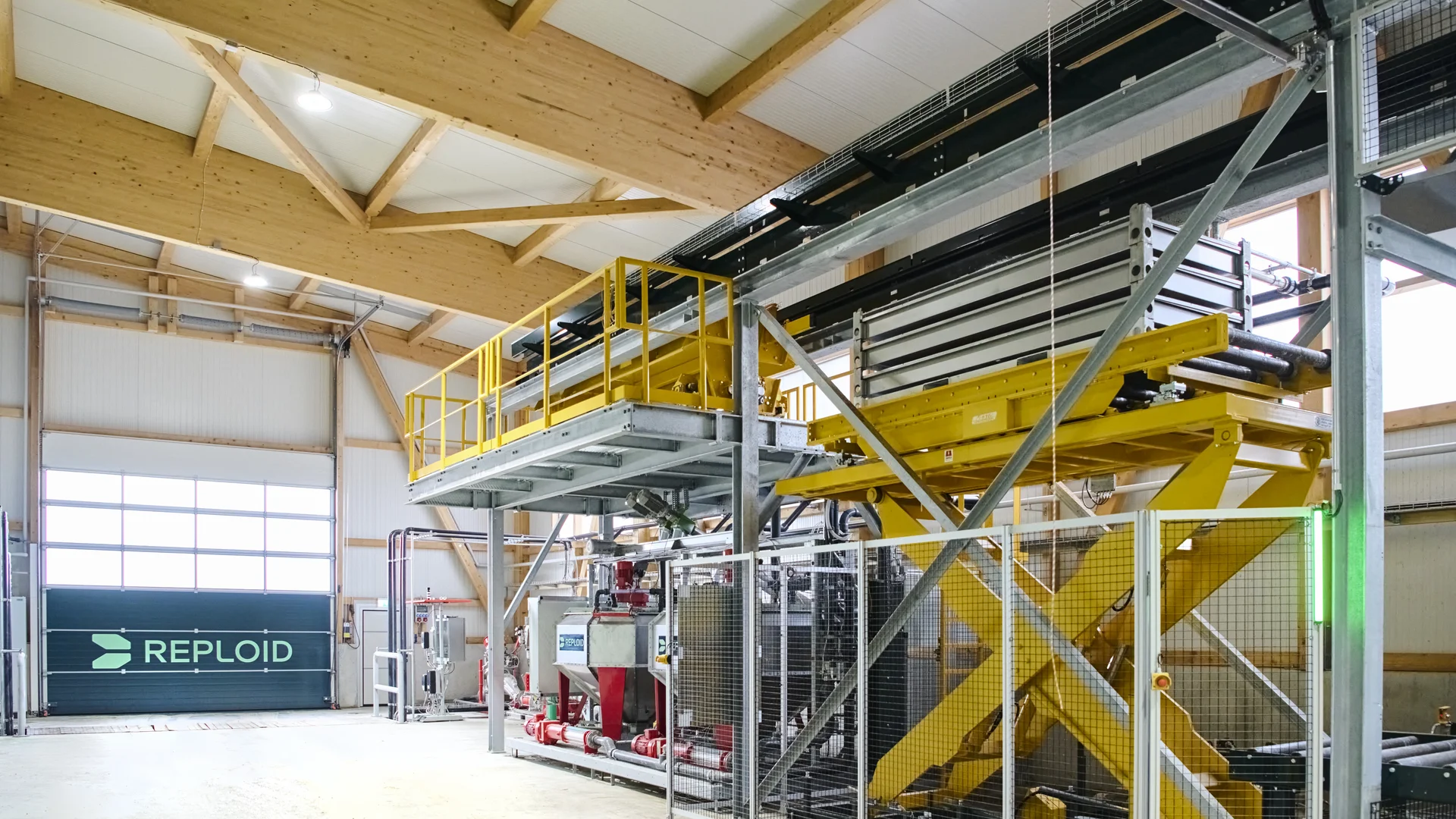
How it works
A biological process. Applied to industry.
The ReFarmUnit combines natural processes with technical precision. Organic residue is not discarded - it becomes the starting point for creating new value. At the heart of the system is the black soldier fly. Its larvae are capable of breaking down large quantities of waste in a very short time.
1. Input becomes a raw material
Organic waste is collected, processed, and specifically incorporated into the process. Its composition is carefully controlled to ensure consistently high efficiency.
What would otherwise be a cost becomes a resource here.
2. Biological conversion
Inside the rearing containers, the larvae consume the waste material within a few days. The process is controlled, climate-regulated, and continuous.
This process generates two key outputs:
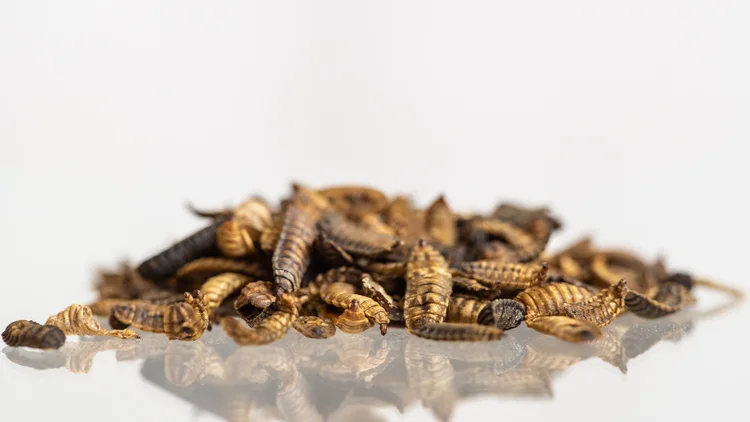
Fattened insect larvae, from which protein and high-quality fat can be extracted
Insect frass (various excretions and residues from the insects), used as a basis for organic fertilizer.
The conversion is fast, efficient, and virtually lossless.
3. Industrial processing
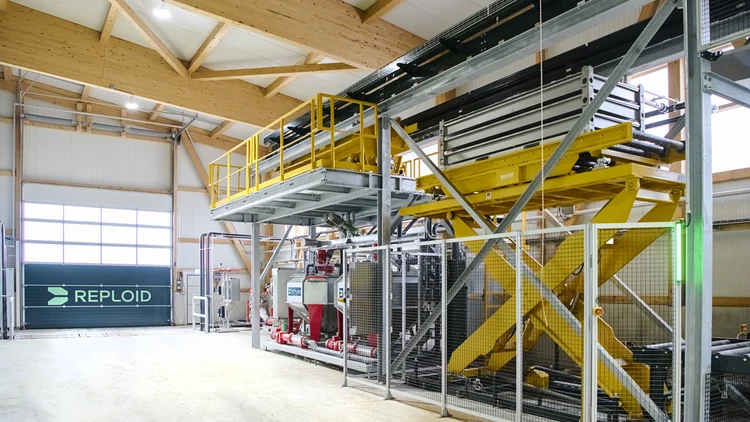
After the rearing phase, the larvae are separated from the insect frass. The larvae are then processed into protein and fat. The insect frass is sanitized, dried, and pelletized to create a marketable organic fertilizer.
All steps are integrated within the system. No external processing chains. No discontinuities.

4. Closed-loop system
The processed products include animal feed, fertilizers, oils, and protein, which are already used in a wide variety of products and processes.
FAQ
Waste materials are transformed into marketable raw materials. At the same time, disposal and raw material costs are reduced. The result is added value generated from existing processes.
REPLOID provides the complete system: technology, breeding, process control, and product inspection. You operate the facility or play a strategic role in the value chain.
The ReFarmUnit follows a standardized design that can be scaled as needed. (Type 10, Type 60) This enables predictable processes and rapid implementation.
You need organic waste, available land or buildings, and energy. These three factors form the basis for a system that transforms waste into raw materials.
Typically, approximately 1,500 m² of land and about 1,500 m² of building space are required.
What matters most is not so much the size as the integration into existing material and energy flows.
The ReFarmUnit requires electricity and heat, ideally from existing processes.
Waste heat is utilized directly, increasing the efficiency of the overall system.
REPLOID works closely with local planning partners throughout the entire process. The goal is to ensure rapid and standardized implementation.
Funding programs are available in many locations. REPLOID can assist with identifying and applying for them.
The facility will be integrated into existing material flows using a modular approach. Existing infrastructure—such as buildings, energy systems, and logistics—will be utilized rather than replaced.
Yes. The use or marketing of protein, fat, and fertilizer can be customized.